
Neem Karoli Baba
Embody Your Soul’s Destiny

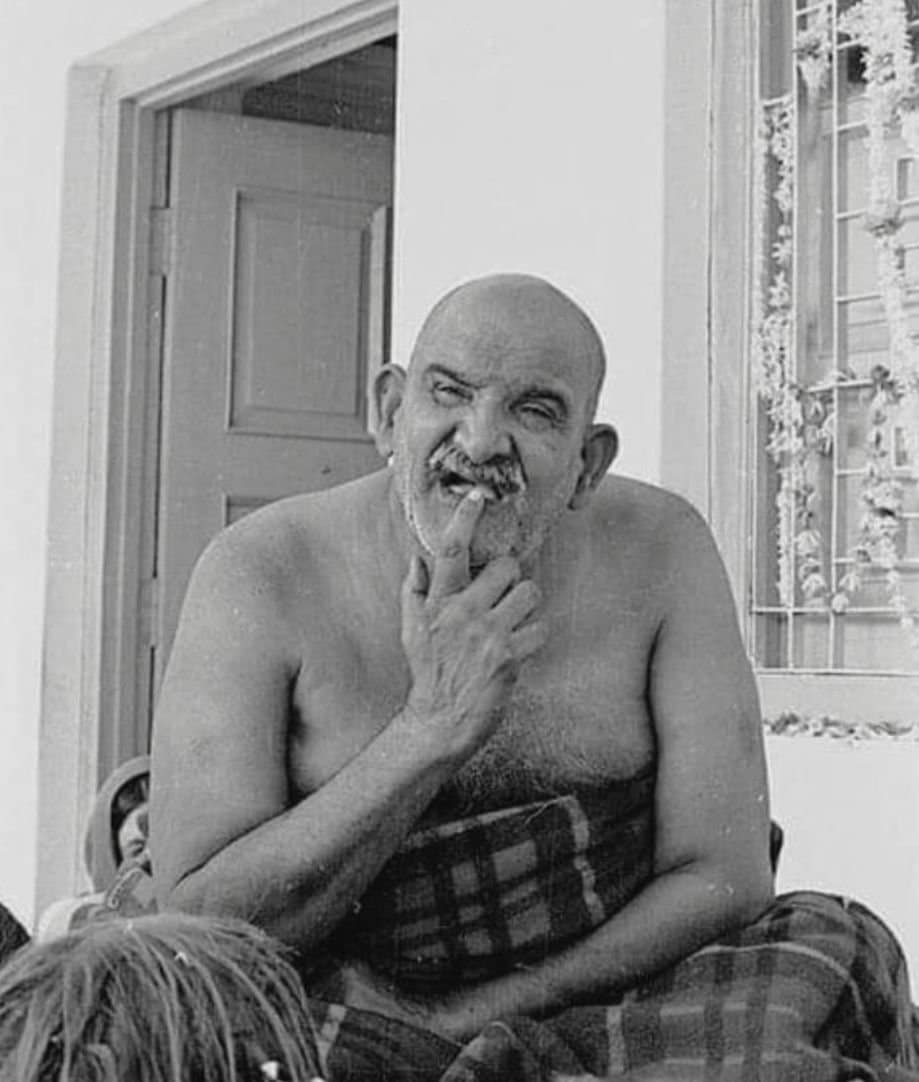

Neem Karoli Baba
A Journey of Unconditional Love
Neem Karoli Baba was born into a prosperous landlord family in the quaint village of Akbarpur, which is now part of Firozabad district in Uttar Pradesh, India. His birth, under the auspicious Shuklpaksh Ashtmi during the Margsheersh month, was marked by scholars’ predictions that he would never face financial scarcity.
Tragedy touched his young life when he lost his mother at the tender age of eight or nine. This loss came at a pivotal time, shortly after his marriage at eleven to ShubhshriRam Beti from the village of Badam Baas. At the mere age of twelve, he left his familial home, embarking on a spiritual journey that would span approximately a decade, though details of this period are shrouded in the mists of time.
His travels took him first to Rajasthan and then to Rajkot, Gujarat. In Rajkot, his deep devotion and service caught the eye of the temple head, who was so moved by young Maharaj Ji’s spiritual dedication that he named him his successor. However, this decision was not without its dissenters, and to maintain harmony, Maharaj Ji chose to leave.
He then settled for a time in Bavania, a village in Gujarat’s Morbi district. Here, near the Ramabai Ashram, he engaged in intense sadhana, immersing himself in meditation for hours in a water pond. His presence in Bavania earned him the affectionate moniker “Talaiyaa Baba.
From the village of Bavania, Maharaj Ji ventured across India, carrying with him a deep sense of spiritual purpose. His travels brought him to the village of Neeb Karori, located in the district of Farrukhabad. It was here, during a pause for rest, that the villagers experienced his divine presence. Despite his limited interactions, his words touched the hearts of the people deeply, resonating with truth and wisdom that seemed to manifest into reality. His presence was a balm, and the villagers, feeling an intense connection and reverence, pleaded for him to stay among them.
In response to their love and devotion, and perhaps recognizing a sacred space for deeper spiritual work, an underground cave was constructed. This cave became his sanctuary for intense spiritual practice. Maharaj Ji would spend his days immersed in meditation, emerging only under the veil of night, his actions a profound testament to the path of renunciation and inner exploration.
Later, he moved to a new cave, a short distance away, established on land that had been overlooked, owned by a Brahmin named Goverdhan. Here, atop this new retreat, Maharaj Ji had a Hanuman temple constructed, signaling a new phase in his spiritual journey. On the day the temple was consecrated, he symbolically shaved his long, matted hair and adopted the wearing of a long cotton dhoti instead of a simple loincloth.
Unleash Your Potential
Start Your Transformation Today
Unlock the life you've always dreamed of! Sign up for our newsletter and receive a treasure trove of free resources to jumpstart your journey to a truly invigorating life. Plus, get exclusive access to upcoming events featuring the inspiring Vedaji!
Remembering Neem Karoli Baba
A Life of Service, Love, and Giving
After establishing himself in the new cave, Maharaj Ji began to forge deeper relationships with the villagers around him, particularly with the youth. He joined in their games and sports, creating bonds through joyful and playful interactions. His approachability and the remarkable feats he displayed during these games—such as his uncanny ability to find any hidden person during hide-and-seek, or his mysterious disappearances and reappearances on trees without any movement —were not merely displays of mystic prowess but gentle teachings on the nature of existence and the illusion of permanent material form.
Maharaj Ji’s interactions were imbued with a light-heartedness that allowed the villagers to relate to him without feeling overwhelmed by the gravity of his spiritual stature. This ease of relationship was a form of teaching in itself, showing that spiritual wisdom does not require solemnity but can be full of joy and love.
Gopal, a bird catcher, who became one of Maharaj Ji’s devoted followers, experienced both the awe-inspiring and nurturing aspects of Maharaj Ji’s spiritual presence. One day, upon inadvertently entering Maharaj Ji’s meditation space, Gopal was confronted with a vision of him in a deep meditative state, serpents coiled around him, reminiscent of a humble servant of Shiva, the topmost Yogi. The shock caused Gopal to faint, but Maharaj Ji, ever compassionate, revived him with a touch, reminding him gently of the boundaries necessary for spiritual space.
Maharaj Ji’s interactions with the divine also highlighted his deep devotion. On an occasion when he had not eaten for several days, he dramatically admonished the statue of Hanuman, showcasing a unique relationship where he could ostensibly chastise a deity. This act, which bewildered the villagers, emphasized his role not just as a devotee but as an embodiment of divine energy, able to engage with sacred icons as equals.
His miraculous influence was further demonstrated when he needed to travel to the Ganges for a holy bath. Accompanied by his followers, including Gopal and a Muslim friend, he approached a moving train. At his presence, the train halted inexplicably, allowing them to board, resuming only once they were safely aboard. This event led to the establishment of a railway station by the Government of India named after him (Baba Lakshman Das Puri station), solidifying his impact on the community and marking a physical testament to his spiritual journey.
On one transformative occasion, Maharaj Ji was traveling by train from Neeb Karori to Farrukhabad. Due to his ascetic appearance, an Anglo-Indian conductor, misunderstanding his stature, insisted that Maharaj Ji disembark. Seated quietly on the platform, Maharaj Ji witnessed the train stubbornly refusing to move. For two hours, despite all technical checks confirming no mechanical faults, the train remained stationary. The station staff, perplexed and desperate, approached Maharaj Ji half in jest, asking him to allow the train to proceed. His initial playful rebuke highlighted the irony of their request. However, upon being pressed about a ticket, Maharaj Ji revealed several legitimate first-class tickets, astonishing the staff. With a humble nod, he agreed to re-board, and the train immediately lurched forward, resuming its journey.
In another significant episode in 1935, a wealthy individual approached Maharaj Ji with a lavish offering of gold coins. Maharaj Ji, ever detached from material wealth, declined the offer. This act, though it alienated some of the local Brahmins who wanted that gold, underscored his unwavering commitment to spiritual rather than material riches.
During his time in Farrukhabad, when a rich man attempted to donate thirty cans of ghee for a sacred fire ceremony, the local Brahmins, having been previously spurned, disparaged Maharaj Ji, convincing the man to leave with a heavy heart. Despite not being present, Maharaj Ji perceived these interactions and, upon his return, decided against performing the annual yagna, and eventually left Neeb Karori for the first time, after having stayed there for 18 years. His subsequent time at Kilaghat on the banks of the Ganges was marked by simple joys, like communicating with cows, who obediently responded to his commands, and profound impacts, such as transforming the heart of Colonel J.C. McKenna, a skeptical Western military officer and his first American disciple.
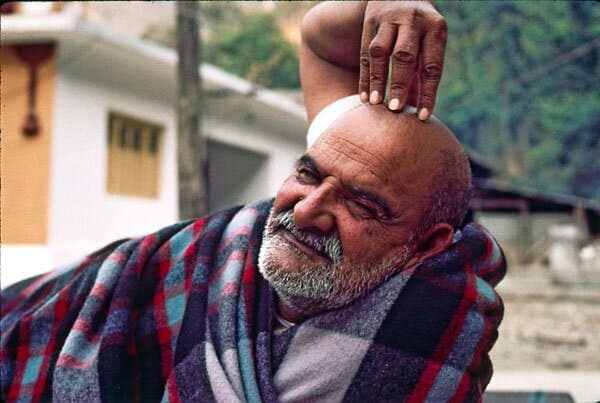
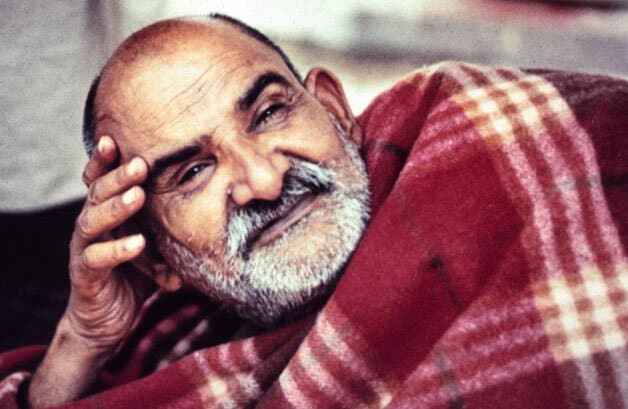
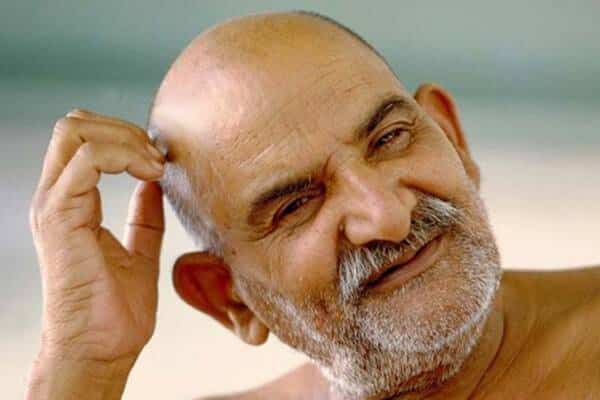
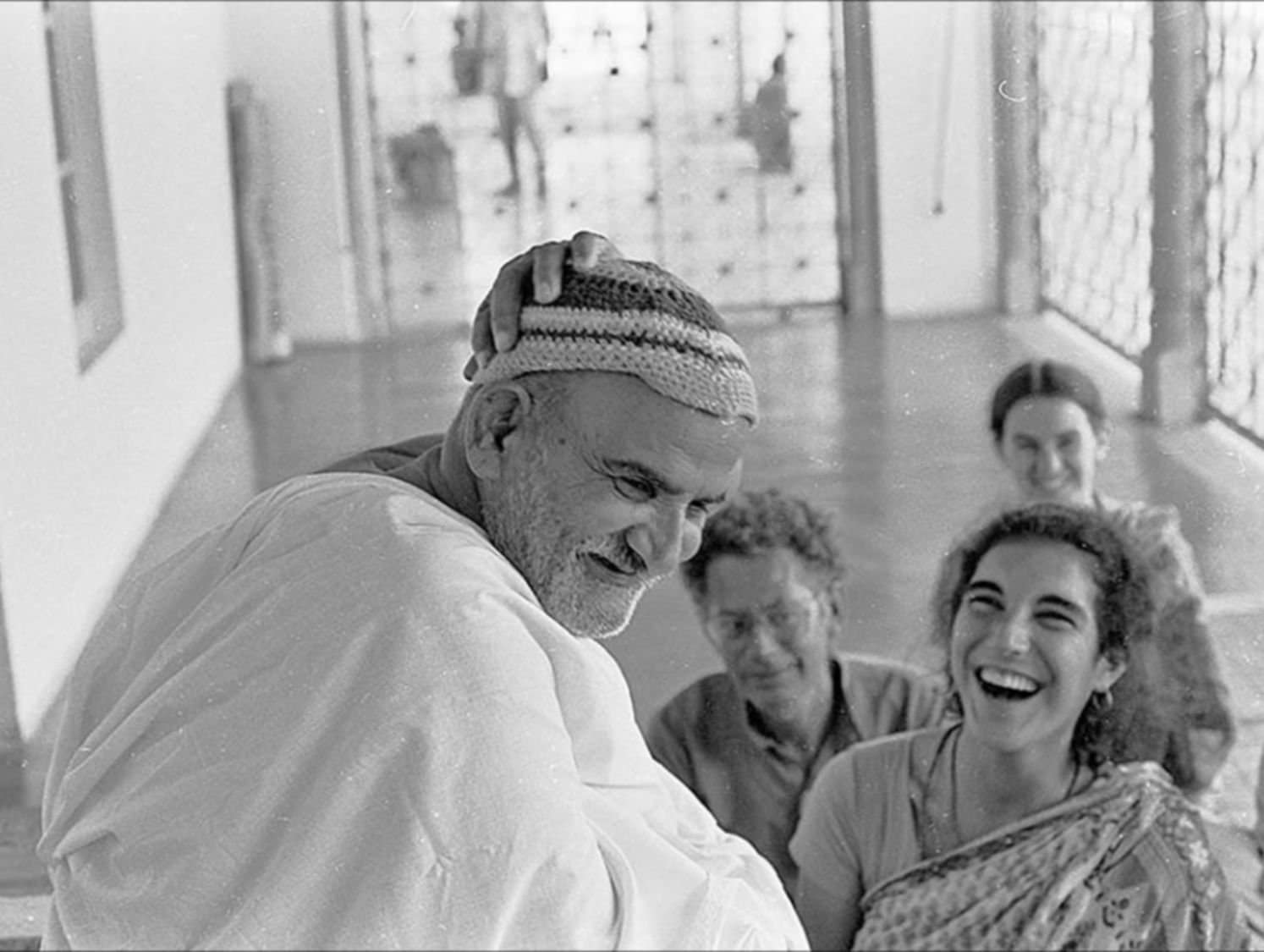
Neem Karoli Baba
A Journey of Unconditional Love
As Maharaj Ji continued to wander, his influence quietly spread through towns like Vrindavan, Delhi, and cities as far as Chennai in South India. His followers included a broad spectrum of society—Hindus, Muslims, Christians, atheists, prominent Indian politicians such as V.V. Giri, (Former President of India), Gopal Swarup Pathak (Former Vice President of India), industrialists such as Jugal Kishore Birla, academics, musicians, and Western seekers like Ram Dass, Jai Uttal and Dr. Larry Brilliant (ex-CEO of google.org and part of WHO’s smallpox eradication efforts), showing the universal appeal of his message.
In the 1940s, Maharaj Ji began to make the scenic town of Nainital a focal point of his spiritual journey. His presence in Nainital was a beacon that drew the townspeople to him in a beautiful, spontaneous procession of devotion. Whenever Maharaj Ji moved through the town, people from all walks of life would abandon their daily tasks and, with a carefree spirit, follow him. This was not just a physical following but a deep, spiritual engagement, as if Maharaj Ji’s very presence turned ordinary moments into a celebration of life and a shared experience of joy.
Even those who never met him, like Steve Jobs, Mark Zuckerberg, and Julia Roberts, felt a profound respect and were influenced by his spiritual legacy, illustrating the far-reaching impact of true spiritual presence that transcends personal interaction.
Maharaj Ji often chose the solitude of Manora hillside, about two kilometers outside Nainital, for reflection and meditation. Yet, he was equally comfortable spending nights on the roadside parapets, a humble witness to the world’s movements. Remarkably, his household devotees, though accustomed to the comforts of their homes, would join him. Night after night, they sat with him, engaged in spiritual discourse or silent communion. Despite the physical discomfort and the rigors of their daytime routines, these devotees found themselves infused with a renewed energy—a testament to the invigorating power of spiritual devotion.
In the early 1950s, Maharaj Ji initiated the construction of his first temple, Hanumangarh, nestled on the serene Manora hillside. Over the ensuing decades, his commitment to spreading places of worship and spiritual refuge led to the establishment of temples and ashrams across various locations including Bhumiadhar, Kainchi, Kakrighat, Vrindavan, Kanpur, Lucknow, Shimla, Delhi, among others. Despite the deep value these sacred spaces held, Maharaj Ji harbored no attachment to them, demonstrating the true essence of selflessness in bhakti; upon their completion, he entrusted their care to local trusts, embodying detachment and the service-oriented path of karma yoga.
Maharaj Ji’s approach to inclusivity, especially in a time and place where social limitations often restricted women’s participation in spiritual life, was revolutionary. He provided special facilities for women in his ashrams, welcoming them as vital members of the spiritual community. This nurturing stance allowed women to see him as a father, brother, or son—whichever role resonated with their hearts. He treated every person as a child of his own, regardless of their gender or social status.
Daily, the ashrams under Maharaj Ji’s guidance became centers of charity and kindness. Everyone who visited was welcomed with food and prasad, and ascetics received not only sustenance but also monetary and material support. Maharaj Ji’s philosophy was simple yet profound: “If you do not empty the stock, how can it be replenished?”
From the 1950s until his Mahasamadhi in 1973, Maharaj Ji’s life was a wandering journey from one temple to another, never anchoring himself in one place for too long. In each location, he lived with profound simplicity and an ever-present concern for the welfare of others. His presence was like that of a benevolent father, bestowing grace and compassion indiscriminately upon all who crossed his path.
Maharaj Ji’s approach to transformation was gentle and rooted in acceptance. He embraced devotees from all walks of life, including those entangled in less virtuous paths. Rather than demanding abrupt changes, he nurtured their inherent goodness, providing them the space and time to evolve naturally. His belief was that every person is born with innate wisdom, a gift from the divine, and he saw his role as helping to awaken this dormant wisdom. Through his loving acceptance, he planted seeds of transformation that gradually blossomed, leading individuals to abandon their detrimental habits and embrace a more spiritually aligned life.
Neem Karoli Baba interacted with everyone with a parental affection, using the informal Hindi words “tu” and “tum” to address not just the simple, but also the more eminent and powerful personalities who came to meet him, embedding these interactions with a deep sense of intimacy and equality. His use of “hum” (we) instead of “I” to refer to himself further reflected his non-dualistic view, seeing himself as part of the larger whole, not separate from it. His speech, often direct and filled with idiomatic expressions like “Tum samajhte nahin, hamari kahi suno” (You do not understand, listen to what I say), and “Hamein bawla mat banao, hum sab jante hein” (Don’t drive me mad, I know everything), was both delightful and enlightening, capturing the hearts of those around him. He once questioned a group of onlookers, “Why do you come to me?” only to answer himself, “You come to me because of my love for you,” underscoring the magnetic pull of his loving presence.
Maharaj Ji was a living embodiment of the concept of Vasudhaiv Kutumbakam (the world as one family). He believed that love is the force that binds everyone together, transcending the conventional boundaries of blood relations. This universal family only became apparent to many of his devotees during his last rites, highlighting how he lived the philosophy that the whole universe was his home and every individual, a beloved family member. He taught that true service is possible only when one centers their thoughts on God, advising that rather than seeking God in a specific form, one should see Him in everything.
On 11 September 1973, Maharaj Ji departed from his physical form in Vrindavan, having arrived there with a deliberate intent from Kainchi with his younger son, Shri Dharm Narain Sharma, to conclude his earthly play, or Bhautik Lila. The details of his life, both before and after this pivotal date, remain shrouded in mystery, as noted by K.M. Munshi, former governor of Uttar Pradesh. Munshi poignantly remarked, “Nobody knows where he came from or where he went away to, nor is his original name known to anyone. What we know about him is only by his grace.”
Neem Karoli Baba’s life serves as a profound reminder of the divine’s capacity to manifest in human form and dwell among us, teaching through simple acts of love and presence. His story prompts us to reflect: How can we, too, embody such unconditional love and acceptance in our interactions, seeing and treating everyone around us as part of one great family?
Unlock Your Potential
Give Your Inbox Purpose
Take the first step towards the life you want. When you sign up, you receive a newsletter with free resources on moving towards an invigorating life (and upcoming events with Vedaji!)